 listicle
Alternatives to Traditional Freelancing for Busy Professionals
Table of Contents
- Why Traditional Freelancing Drains Busy Professionals
- Top Vetted Talent Platforms That Cut Out the Bidding Wars
- Direct Client Acquisition Strategies Without Cold Pitching
- Low-Effort Side Hustles for Busy People: Passive and Low-Maintenance Income
- How to Make Money Reposting Content: A 15-Minute Daily Routine
- Repost Revenue vs Skool for Side Hustles: Which Fits Your Schedule?
- Comparison Table: Alternatives to Traditional Freelancing
- Conclusion: Choosing the Right Alternative for Your Busy Schedule
- Frequently Asked Questions
Last Updated: September 16, 2026
Why Traditional Freelancing Drains Busy Professionals
Traditional freelancing is a time-for-money trap. For anyone already working full-time, bidding on projects, chasing unpaid invoices, and maintaining profiles across five platforms is a second job, not a side hustle.
The bidding model is the core problem. Platforms that require a pitch for every gig reward volume, not expertise, so the winners are those with hours to burn on proposals, a poor fit for a busy professional.
There is also a math problem. Marketplace commissions cut into every payment, and rates compress when hundreds bid on the same listing. Saturation pushes prices down, not up.
The alternatives to traditional freelancing for busy professionals split into three buckets: vetted talent platforms that remove bidding, direct client acquisition that removes the middleman, and low-maintenance income streams that remove the hourly trade entirely. This guide from The Repost Routine Masterclass covers all three, ranked by how much time they actually demand.
Top Vetted Talent Platforms That Cut Out the Bidding Wars
Vetted talent platforms replace open bidding with screening. You apply once, pass a review, and clients come to you with matched work instead of you competing against a hundred bidders. That is the category's biggest time saver: proposal hours get redirected into billable work.
But "vetted" is a marketing word, not a standard. Before you invest an evening in any application, run the platform through four questions:
- Who screens, and how hard is the screen? A human portfolio review differs from an automated keyword filter. Ask the acceptance rate and what the review examines.
- Who pays the platform? If the fee comes out of your rate, your effective hourly drops. If the client pays a markup, your quoted rate stays intact.
- How does matching work? Inbound matched work is low-maintenance. A "talent directory" that still requires pitching is bidding with extra steps.
- What is the time cost of staying listed? Some platforms reward activity; others let a complete profile sit and generate requests. For a busy professional, the second model is the only one that scales.
Toptal and Contra: High-End and Commission-Free Options
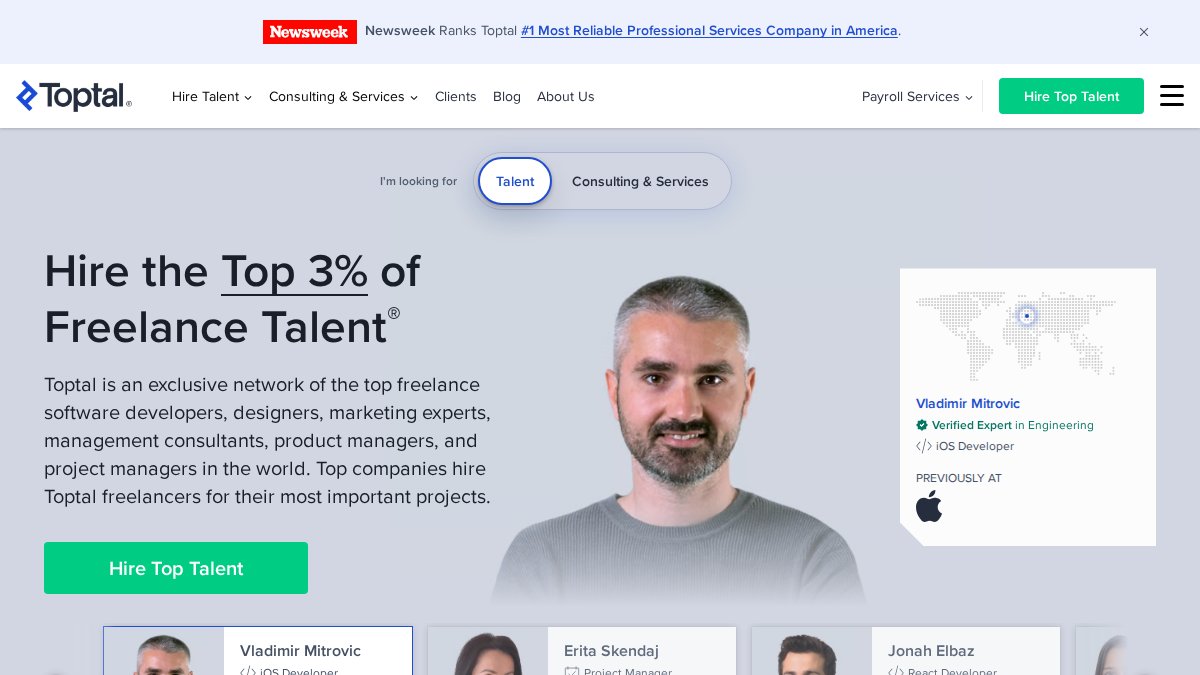
Toptal screens out most applicants, then matches accepted talent directly with companies. There is no bidding and no platform fee taken from your rate. The trade-off is selectivity and time: the screen can take weeks, and failing it gets you nothing. It suits senior specialists with a deep portfolio who can afford a slow on-ramp.
Contra is commission-free for independent contractors, includes a portfolio builder, and handles contracts and payment escrow automatically, so you keep your full rate. The catch is a smaller client pool than the massive general marketplaces, meaning fewer inbound matches per month, often an acceptable trade: less volume, less noise.
Hubstaff Talent and Jobbers.io: Free Directories for Long-Term Work
Hubstaff Talent is a free directory connecting remote professionals with businesses hiring for long-term roles (Find Remote Jobs and Projects). There are no middleman fees and no bidding, just direct communication. It suits people who want steady remote work rather than one-off gigs, and with no fee, the platform has no incentive to route work away from you.
Jobbers.io emphasizes zero commission fees and direct client-to-freelancer contact. The fee structure is transparent, but the platform is still emerging, so volume is lower and you may need to supplement it with direct outreach. Treat it as one channel, not a pipeline.
| Platform | Cost to Join | Commission | Screen Difficulty | Best For |
|---|---|---|---|---|
| Toptal | Free (screening required) | None for talent | High | Senior specialists, long engagements |
| Contra | Free | None | Low to moderate | Creative contractors keeping full rate |
| Hubstaff Talent | Free | None | Low | Long-term remote roles |
| Jobbers.io | Free | None | Low | Avoiding commission fees |
The Platform Fatigue Problem Nobody Warns You About
Most guides tell you to join five platforms for exposure.
Direct Client Acquisition Strategies Without Cold Pitching
Direct client acquisition means building a pipeline that brings work to you instead of you hunting for it.
The Three Passive Assets Worth Building
**1.
A Low-Maintenance Weekly Routine
- Post one short, useful update per week on a professional network, tied to your niche expertise. One post, not a content calendar.
- Comment on posts from potential clients in your industry to add something worth reading, not to sell. Five minutes, three comments.
- Ask satisfied contacts for one specific introduction, not a vague "let me know if you hear of anything."
- Track who referred whom and thank referrers promptly. Referrals that go unthanked do not repeat.
Contracting Versus Freelancing: A Distinction That Changes Your Positioning
Most guides treat "freelancing" and "independent contracting" as the same thing.
Low-Effort Side Hustles for Busy People: Passive and Low-Maintenance Income
The category includes a few reliable shapes:
- Content reposting: curating and resharing existing content with tracked links, which takes minutes per day rather than hours.
- Digital products: templates, guides, or presets sold repeatedly without restocking.
- Affiliate and referral income: commissions on tools you already use and recommend.
How to Make Money Reposting Content: A 15-Minute Daily Routine
A workable daily sequence:

- Open your saved list of source accounts and pick two or three posts that already perform well.
- Repost with your affiliate or commission link attached, using the caption format you have tested.
- Log the post in a simple tracker: date, source, link, result.
- Spend five minutes engaging on the accounts you reposted from, which keeps you visible.
Repost Revenue vs Skool for Side Hustles: Which Fits Your Schedule?
The repost revenue vs skool for side hustles comparison comes down to time model.
Comparison Table: Alternatives to Traditional Freelancing
| Option | Time Commitment | Commission | Best For |
|---|---|---|---|
| The Repost Routine Masterclass | ~15 min/day | None stated | Busy professionals wanting a faceless, low-time side hustle |
| Toptal | Project-based | None for talent | Senior specialists clearing a tough screen |
| Contra | Project-based | None | Creative contractors keeping full rate |
| Hubstaff Talent | Project-based | None | Long-term remote roles |
| Jobbers.io | Project-based | None | Avoiding commission fees |
| Direct client acquisition | Ongoing networking | None | Building a referral pipeline over time |
| Community platforms | Daily moderation | Varies | People who can commit to running a group |
Conclusion: Choosing the Right Alternative for Your Busy Schedule
The honest test is simple: how many minutes per day can you actually protect?
Frequently Asked Questions
What are some good alternatives to freelancing for busy professionals?
Busy professionals can explore vetted talent platforms like Toptal or Contra, which reduce bidding and connect directly with clients. Direct client acquisition through LinkedIn and professional networking builds inbound leads without constant pitching. Low-effort side hustles such as reposting Instagram content offer a 15-minute daily routine. These alternatives to traditional freelancing minimize time spent on proposals and platform management, letting you focus on billable work or passive income.
How can I generate income without the constant cycle of bidding on freelance projects?
Shift to platforms that use matching or direct outreach instead of bidding. Toptal screens talent and matches them with clients, while Contra charges no commission and lets you showcase a portfolio. Hubstaff Talent and Jobbers.io are free directories that connect you directly with businesses. You can also build a personal brand on LinkedIn to attract inbound leads, or try content reposting for a low-effort side hustle that requires only a smartphone and 15 minutes a day.
Is it possible to build a side income without showing my face on camera?
Yes. Faceless side hustles like reposting Instagram content are designed for camera-shy individuals. The Repost Routine Masterclass teaches a copy-and-paste method to share curated content and earn commissions, all from your smartphone. You never need to appear on video or reveal your identity. Other options include selling digital products, affiliate marketing through a blog, or offering freelance services like writing or editing where your face isn't the product.
What are the best low-effort side hustles for full-time employees?
Low-effort side hustles for busy people include reposting content on Instagram, which takes about 15 minutes daily; selling print-on-demand merchandise; and participating in affiliate programs. These require minimal upfront time and can be done outside work hours. The Repost Routine Masterclass offers a structured 10-day challenge to start reposting and potentially earn $500-$1,000 per week. Other options like tutoring or consulting demand more hours but pay well. Choose based on your available time and energy.
How does content curation compare to traditional freelance work?
Content curation, such as reposting Instagram content, differs from traditional freelancing in time commitment and client management. Freelancing often involves bidding, client calls, and project deadlines, which can consume 10+ hours a week. Curation follows a simple 15-minute daily routine: find content, repost with affiliate links, and earn commissions. It requires no client communication or specialized skills. While freelance work may pay more per hour, curation offers scalability and passive income potential without the overhead.