 how-to
Make $1,000 Weekly on Instagram: A Step-by-Step Guide
Table of Contents
- Can You Actually Make $1,000 Weekly on Instagram?
- How Much Do Micro-Influencers Make Per Post
- Instagram Affiliate Marketing for Beginners
- How to Get Brand Deals on Instagram
- Selling Digital Products on Instagram
- The 15-Minute Daily Routine to Earn $1,000 Weekly
- Tax and Legal Considerations for Creator Income
- Common Mistakes That Kill Your Earning Potential
Last Updated: August 10, 2026
Can You Actually Make $1,000 Weekly on Instagram?
Yes, but not the way most people think. Making $1,000 weekly on Instagram requires a specific strategy, consistent execution, and realistic expectations. The Repost Routine Masterclass teaches a proven system for women who want to build an income stream without showing their face on camera, using a simple 15-minute daily routine centered on reposting content and driving traffic through affiliate links and brand partnerships.
You no longer need millions of followers or viral content to earn meaningful money. Micro-influencers with engaged niche audiences often outperform macro-influencers in revenue generation. What separates accounts that actually make $1,000 weekly from those stuck at zero: they've chosen a specific niche, built multiple revenue streams, and automated as much of the content workflow as possible.
How Much Do Micro-Influencers Make Per Post
Micro-influencers with 10,000 to 100,000 followers typically earn between $100 and $1,000 per sponsored post, depending on engagement rate and niche. Real money comes from stacking multiple revenue streams: affiliate commissions, digital product sales, and sponsored content working together.
Engagement rate matters far more than follower count. An account with 15,000 highly engaged followers in a specific niche will attract better-paying brand deals than an account with 100,000 passive followers. Brands care about conversion potential, not raw numbers.
Most people fail because they try to monetize before building the right foundation. You need an audience that trusts you enough to click links and buy products. That trust comes from consistency, niche focus, and providing genuine value.
Instagram Affiliate Marketing for Beginners
Affiliate marketing is the fastest path to revenue on Instagram because you don't need brand approval. You simply share products you genuinely recommend, include your affiliate link, and earn a commission on every sale. Many successful accounts generate 40-60% of their income from affiliate commissions alone.
Choose products relevant to your niche, sign up for their affiliate program, and share the link in your Instagram bio, Stories, or Reels. When followers click and purchase, you earn a percentage of the sale.
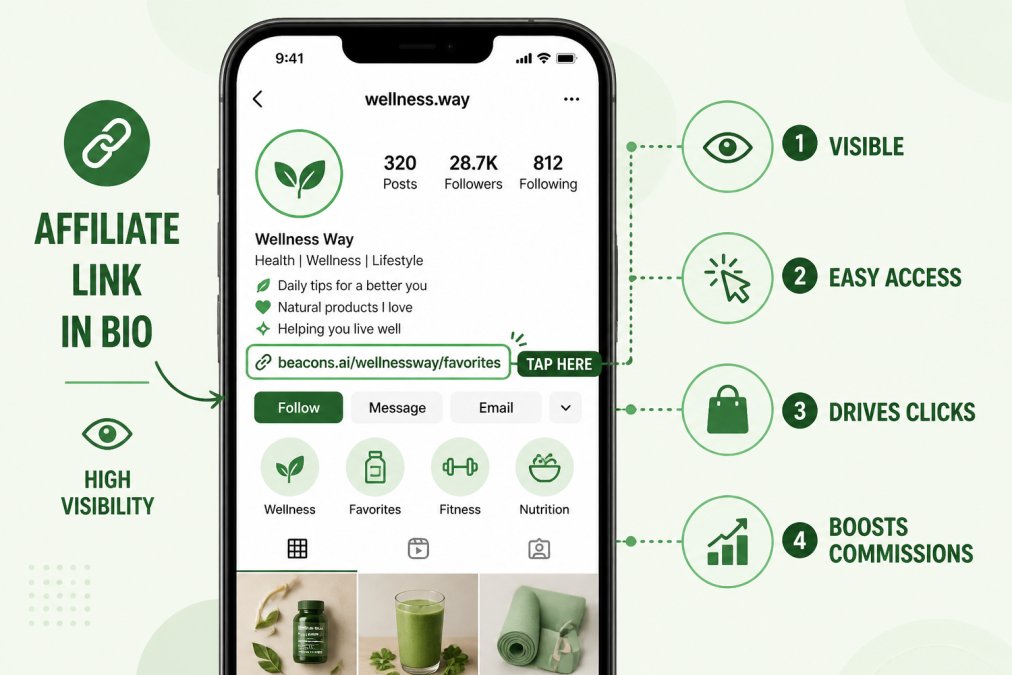
The key is relevance and trust. A recommendation that feels authentic converts far better than random promotions. If you're in productivity, recommend project management tools. If you're in sustainable living, promote eco-friendly products. Focus on products you've actually used, authenticity shows in conversion rates.
How to Get Brand Deals on Instagram
Brand partnerships generate bigger paydays. Once you've built an engaged audience in a specific niche, brands will seek you out for sponsored content.
You need three things: a clear niche, consistent posting, and an engaged audience. Brands care far less about follower count than whether your audience actually engages. An account with 20,000 followers and 8% engagement will get better deals than one with 100,000 followers and 1% engagement.
Identify 10-15 brands in your niche you genuinely like. Follow them, engage with their content, then send a professional pitch including your engagement metrics, niche focus, and past brand work. Include a media kit, a simple one-page document showing follower count, engagement rate, and audience demographics.
Know your worth. A reasonable baseline is $200-500 per post for micro-influencers, though this varies by niche and brand budget. Don't accept the first offer; brands often start low.
Selling Digital Products on Instagram
Digital products represent the highest-margin revenue stream. Once created, a course, template, checklist, ebook, or community sells repeatedly with zero additional production cost.
Create products that solve specific problems for your niche. If you've built an audience around productivity, sell a time management course or project planning templates. Drive traffic to a sales page (hosted on your website or platforms like Gumroad or SendOwl) through Stories, Reels, and your bio link.
Pricing depends on product type. Digital courses typically range from $47 to $297. Templates and bundles usually sell for $17-97. Each sale has virtually zero delivery cost, so profit margins are massive compared to affiliate commissions.
The 15-Minute Daily Routine to Earn $1,000 Weekly
Making $1,000 weekly doesn't require 8 hours daily. It requires 15 focused minutes, strategic content selection, and the right monetization setup. The Repost Routine Masterclass teaches a specific daily workflow that removes guesswork and automates heavy lifting.
Step 1: Choose Your Niche and Audience
Your niche is the foundation. Identify a specific audience segment you understand deeply, not "fitness" but "busy mothers doing 20-minute workouts at home," not "finance" but "women in their 30s building side hustles."
Niche selection determines which brands pay you, which affiliate products convert, and how easily your audience trusts your recommendations. The narrower your niche, the more valuable you become to brands and partners.
Step 2: Set Up Your Monetization Channels
Before posting, set up infrastructure that turns followers into income: affiliate links in your bio, a digital product sales page, and a media kit for brand outreach.
Start with one affiliate program in your niche. Add your link to your Instagram bio. Set up a landing page or use a link-in-bio tool like Linktree to organize multiple links. This becomes your conversion hub.
Step 3: Source and Repost High-Performing Content
Instead of creating original content from scratch daily, identify high-performing content in your niche and repost it with proper credit. This saves enormous time while providing consistent, proven content.
Look at accounts in your space with high engagement. Save their best posts. Repost them with a caption that adds value, your perspective, a tip, or a call to action driving followers to your bio link.
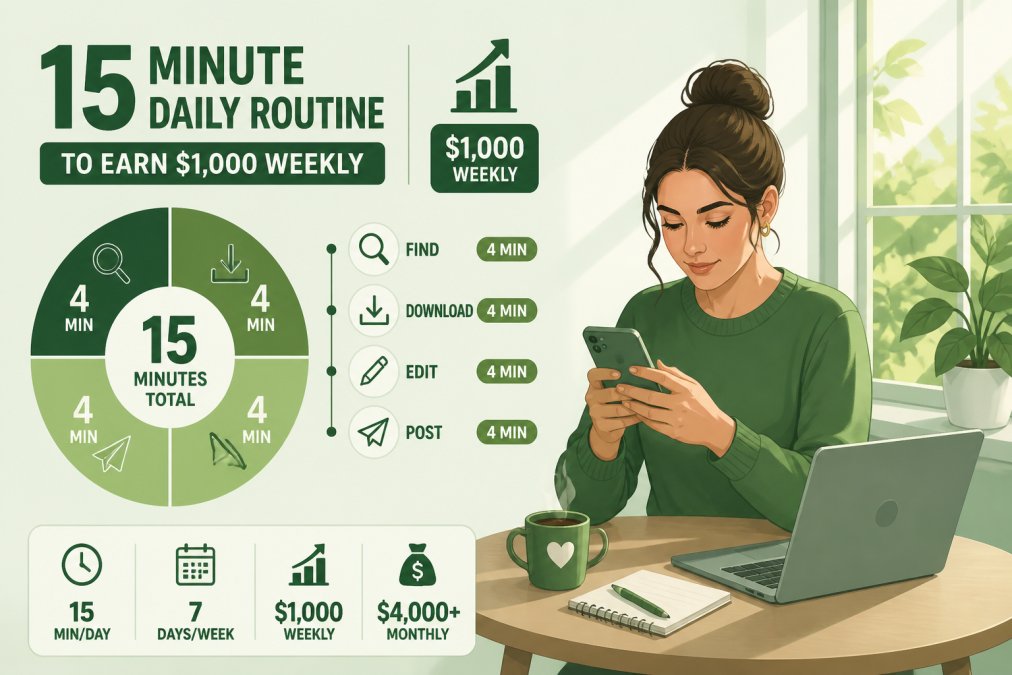
Step 4: Add Your Call to Action and Affiliate Links
Every post needs a clear call to action driving followers to your monetization channels. This might be "Link in bio for the free template," "DM me for access," or "Check the link in my bio for this product."
The CTA should be specific and relevant. If sharing a productivity tip, direct followers to your course or template. If sharing a product recommendation, link to your affiliate page. The CTA bridges content and conversion.
Step 5: Track Performance and Optimize
Spend 5 minutes daily reviewing which posts drove the most clicks to your bio link. Use a link-tracking tool to see which posts send the most traffic and convert the highest percentage of visitors.
Double down on what works. If reposted content about a specific topic consistently drives clicks, create more in that category. If a particular CTA phrase works better, use it more often.
Tax and Legal Considerations for Creator Income
Income from Instagram, affiliate commissions, brand deals, or digital product sales, is taxable income. The IRS treats it as self-employment income, meaning you owe both income tax and self-employment tax.
If you're making $1,000 weekly, set aside 25-30% of that income for taxes. Keep detailed records of all income sources and track business expenses; tools, software, or equipment purchased for your Instagram business may be deductible.
Consider consulting a tax professional who understands creator income. The FTC also requires that you disclose sponsored content and affiliate relationships clearly. Add #ad or #sponsored to brand deals and be transparent about affiliate links. Non-compliance can result in penalties.
Common Mistakes That Kill Your Earning Potential
Most people fail to reach $1,000 weekly because they make preventable mistakes early on.
First: choosing a niche based on trends rather than expertise. Trending niches are crowded. Your advantage comes from deep knowledge, allowing you to provide genuine value and attract loyal, converting followers.
Second: promoting irrelevant products for high commissions. This destroys trust faster than anything. Your audience will unfollow if they realize you're recommending products you don't believe in.
Third: not having a clear call to action. Many creators post great content but never tell followers what to do next. Every post should guide followers toward one of your monetization channels.
Fourth: giving up too early. Building an engaged audience takes 3-6 months of consistent posting before meaningful income appears. The Repost Routine Masterclass accelerates this by removing the content creation bottleneck, but patience is still required.
Fifth: not tracking conversions. You might have high engagement on posts that don't drive clicks to your bio link. Focus on posts that drive actual traffic and conversions, then replicate that formula.
Making $1,000 weekly on Instagram is achievable with a specific, tested system. The Repost Routine Masterclass provides exactly that, a 10-day challenge teaching you how to build an income stream using a 15-minute daily routine without showing your face on camera. Start with a clear niche, stack your monetization channels, and commit to 15 minutes daily. That's the formula that works.
Frequently Asked Questions
How many followers do you need to make $1,000 a week on Instagram?
You don't need a large follower count to make $1,000 weekly on Instagram. Micro-influencers with 1,000-10,000 followers can earn significantly through affiliate marketing and brand partnerships if they have high engagement rates. The key is audience quality, not quantity. A niche audience with strong engagement converts better than a large, disengaged following. Many successful creators use reposting strategies to build passive income streams without ever reaching macro-influencer status.
What's the difference between affiliate marketing and brand deals on Instagram?
Affiliate marketing pays you a commission when followers click your link and make a purchase, you earn a percentage of each sale. Brand deals involve companies paying you a flat fee to promote their product or service, regardless of sales. For beginners, affiliate marketing requires less negotiation and can start immediately. Brand deals typically come after you build credibility and engagement. Many successful creators combine both strategies to diversify revenue streams and reduce income volatility.
Is it realistic to earn $1,000 weekly as a micro-influencer?
Yes, it's realistic for micro-influencers with the right strategy. Earning $1,000 weekly ($52,000 annually) requires consistent content, strong engagement, and multiple monetization channels. Micro-influencers often outperform larger accounts because they have loyal, niche audiences with higher conversion rates. Success depends on your niche selection, content quality, and how effectively you use affiliate links and brand partnerships. The timeframe to reach this income level varies, but many creators see results within 3-6 months with dedicated effort.
Do I need a business license to earn money on Instagram in the US?
Yes, if you're earning income from Instagram, you should register as a self-employed individual or business entity with the IRS. You'll need an Employer Identification Number (EIN) and must report all income on your tax return. State requirements vary, so check your local regulations. Even if you're earning under $400 annually, reporting is required. Keeping detailed records of earnings, affiliate commissions, and brand deal payments is essential for tax purposes and protects you in case of an audit.
This article was written using GrandRanker
Frequently Asked Questions
How many followers do you need to make $1,000 a week on Instagram?
You don't need a large follower count to make $1,000 weekly on Instagram. Micro-influencers with 1,000–10,000 followers can earn significantly through affiliate marketing and brand partnerships if they have high engagement rates. The key is audience quality, not quantity. A niche audience with strong engagement converts better than a large, disengaged following. Many successful creators use reposting strategies to build passive income streams without ever reaching macro-influencer status.
What's the difference between affiliate marketing and brand deals on Instagram?
Affiliate marketing pays you a commission when followers click your link and make a purchase—you earn a percentage of each sale. Brand deals involve companies paying you a flat fee to promote their product or service, regardless of sales. For beginners, affiliate marketing requires less negotiation and can start immediately. Brand deals typically come after you build credibility and engagement. Many successful creators combine both strategies to diversify revenue streams and reduce income volatility.
Is it realistic to earn $1,000 weekly as a micro-influencer?
Yes, it's realistic for micro-influencers with the right strategy. Earning $1,000 weekly ($52,000 annually) requires consistent content, strong engagement, and multiple monetization channels. Micro-influencers often outperform larger accounts because they have loyal, niche audiences with higher conversion rates. Success depends on your niche selection, content quality, and how effectively you use affiliate links and brand partnerships. The timeframe to reach this income level varies, but many creators see results within 3–6 months with dedicated effort.
Do I need a business license to earn money on Instagram in the US?
Yes, if you're earning income from Instagram, you should register as a self-employed individual or business entity with the IRS. You'll need an Employer Identification Number (EIN) and must report all income on your tax return. State requirements vary, so check your local regulations. Even if you're earning under $400 annually, reporting is required. Keeping detailed records of earnings, affiliate commissions, and brand deal payments is essential for tax purposes and protects you in case of an audit.