 how-to
Does Instagram Pay You With 1,000 Followers?
Table of Contents
- Does Instagram Pay You if You Have 1,000 Followers?
- How to Make Money on Instagram With 1K Followers
- How to Get Paid for Reposting Content
- Instagram Monetization Requirements for Small Accounts
- Brand Deals for Micro-Influencers
- The Real Truth About Platform Pay vs. Creator Earnings
- Common Mistakes That Kill Monetization Potential
- Frequently Asked Questions
Last Updated: September 25, 2026
Does Instagram Pay You if You Have 1,000 Followers?
The short answer is no. When you instagram pay 1000 followers, the platform does not pay creators based on follower count alone. Instagram pays based on engagement, content performance, and specific monetization programs you qualify for.
This misconception costs creators months of wasted effort. The Repost Routine Masterclass is designed to help women generate an extra $500-$1,000 per week by reposting Instagram content.
Instagram has multiple revenue streams. Most depend on engagement rates, video views, and brand partnerships, not follower count alone. A creator with 500 highly engaged followers can earn more than someone with 5,000 disengaged ones.
The platform's monetization programs have specific thresholds. Meeting follower count is just the first gate; you also need engagement, watch time, or audience demographics that brands care about.
How to Make Money on Instagram With 1K Followers
Even if you instagram pay 1000 followers, you won't qualify for Instagram's paid programs yet, but you can generate income through external methods that don't depend on follower count.
Your income sources at this stage:
- Affiliate marketing through links in your bio
- Brand partnerships with micro-influencers rates
- Digital product sales
- Sponsored content from smaller brands
- The Repost Routine Masterclass system
External revenue doesn't require Instagram's permission, you control the monetization, which is why many small creators earn more than those waiting for platform payouts.
Reels Play Bonus Program
The Reels Play Bonus Program pays creators based on video performance, not follower count (Earn with Bonuses | Instagram for Creators). Most creators at 1,000 followers don't qualify yet; the program requires consistent Reels that achieve 1,000+ views. Payout depends on region and content category, with earnings varying based on view volume and audience location.
Affiliate Marketing and Commission Links
Affiliate marketing works at any follower count. Join programs from brands in your niche, get your unique commission link, and share products you use. This method scales with engagement, not followers, a creator with 1,000 highly engaged followers can earn more than someone with 10,000 passive ones. Popular programs include Amazon Associates, brand-specific programs, and ShareASale, with commission rates from 2% to 50%. Track links using UTM parameters or affiliate dashboards to identify top-performing posts.
How to Get Paid for Reposting Content
Reposting content is a legitimate income strategy at any follower count. Reposted content already has proven engagement, and you earn through affiliate links, brand deals, or monetization programs tied to views.
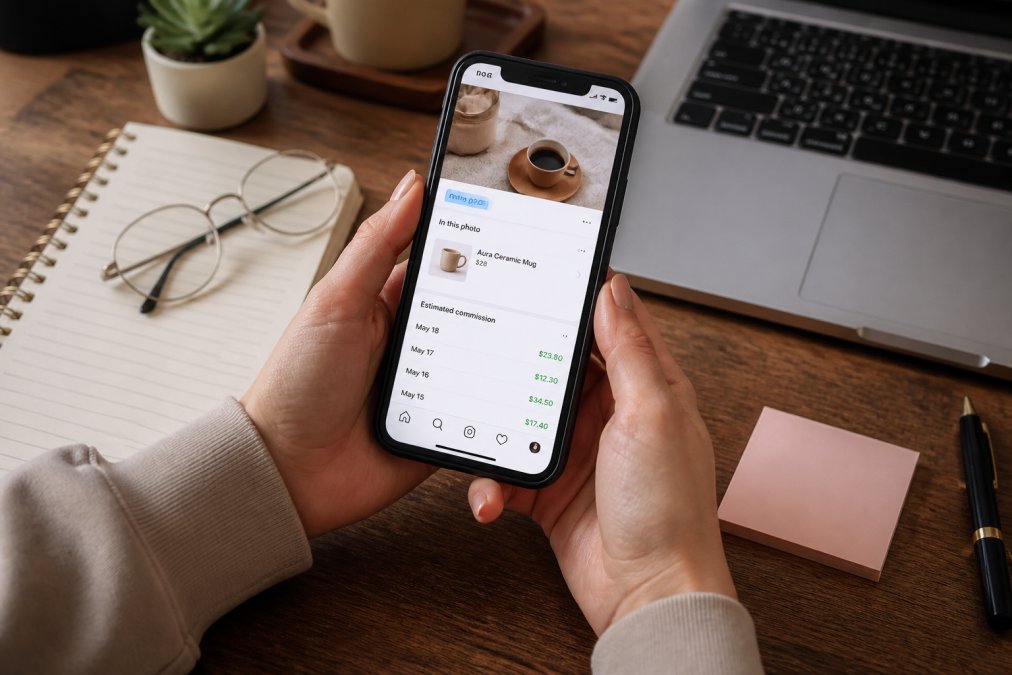
Steps to get started:
- Find high-performing content in your niche
- Repost with proper attribution and your affiliate link
- Use a call-to-action directing followers to your bio link
- Track which reposts drive the most clicks
- Scale what works
The Repost Routine Masterclass teaches this system in detail. The 15-minute daily routine involves finding content, adding your links, and scheduling posts.
Instagram allows reposting if you credit the original creator. Monetization happens through your links, not Instagram directly, you earn when followers click and convert, so link placement and call-to-action matter more than follower count.
Instagram Monetization Requirements for Small Accounts
Current requirements for Instagram's paid programs (2026):
- Reels Play Bonus: Typically 10,000+ followers, but also requires consistent video performance (measured by average view count and completion rate). Instagram does not publish exact thresholds, but creators report needing Reels that regularly achieve 1,000+ views to qualify.
- Instagram Partner Monetization: Varies by region and content category; generally 10,000+ followers plus 600,000 total views in the last 60 days.
- Branded Content: 10,000+ followers in most regions, plus compliance with branded content policies (proper disclosure, no prohibited categories).
- Subscriptions: 10,000+ followers, available in select regions, requires consistent posting schedule.
- Instagram Stars (Gifts): 10,000+ followers; lower barrier than other programs but dependent on audience willingness to send gifts during live streams.
What actually gets measured beyond follower count:
Engagement rate is the hidden requirement. Instagram prioritizes accounts with 3-5% engagement or higher. Watch time matters for video programs, average view duration, not just view count. Account age and consistency also factor in; Instagram favors accounts active for 90+ days with regular posting. Content policy compliance is non-negotiable; any violation disqualifies you from monetization programs.
The engagement rate calculation:
Engagement rate = (Likes + Comments + Shares + Saves) ÷ Follower Count × 100
At 1,000 followers, aim for 100+ total interactions per post to hit 10% engagement, well above the 3-5% threshold. This is achievable through niche content and consistent posting, even without viral reach.
You don't meet Instagram's follower thresholds yet, but building engagement rate and watch-time metrics now will accelerate approval once you reach 10,000 followers. Creators who build engagement early get approved within weeks of hitting thresholds, while those without strong engagement wait 2-6 months.
Brand Deals for Micro-Influencers
Micro-influencers with 1,000-10,000 followers attract brands actively. Brands prefer working with micro-influencers because costs are lower, engagement rates are higher, and audiences feel more authentic than mega-influencer followings.
Brands allocate budgets across many micro-influencers rather than betting on one celebrity. A brand might spend $5,000 across 50 micro-influencers instead of $5,000 on one macro-influencer, reducing risk and often yielding better ROI.
How to attract brand deals:
- Identify 20-30 brands that actively partner with creators in your niche.
- Track engagement rate, average likes/comments per post, follower growth, audience age, location, and interests.
- Create a media kit (1-2 page PDF) with stats, audience profile, and rate card. Include an Instagram Insights screenshot.
- Research brand partnership contacts via LinkedIn, brand websites, or networks like AspireIQ.
- Reach out with personalized pitches referencing their recent campaigns.
- Start with smaller brands to build your portfolio.
Setting rates for micro-influencer sponsored posts:
Rates vary widely based on engagement rate, audience demographics, content format, and exclusivity. However, a common framework is:
Flat fee model: $100-$500 per sponsored post at 1,000 followers, scaling to $500-$2,000 at 5,000 followers, and $2,000-$5,000+ at 10,000 followers. These ranges assume 3-5% engagement rate. Higher engagement justifies higher rates.
Commission-based model: 5-20% of sales generated through your unique discount code or affiliate link. This works well if the brand has a clear conversion path (e-commerce, SaaS trial, etc.). Track conversions using UTM parameters or the brand's affiliate dashboard.
Hybrid model: $300 flat fee + 10% commission on sales above $1,000. This protects you if the campaign underperforms while rewarding you for strong performance.
Engagement rate multiplier: Some creators charge based on engagement rate. Example: $50 × engagement rate percentage. A 5% engagement rate = $250 per post. This aligns your rate with your actual value.
Tools for proving ROI to brands:
- Linktree or Later: Track clicks and conversions per campaign.
- UTM parameters: Add custom tracking to sponsored links so Google Analytics shows traffic and revenue per post.
- Unique discount codes: Negotiate a code with the brand to track redemptions and revenue.
- Affiliate dashboards: Platforms like Amazon Associates and ShareASale show clicks, conversions, and earnings in real time.
- Instagram Insights: Export reach, impressions, and profile visits per post.
Sample post-campaign report for brands:
After a sponsored post, send the brand a one-page report showing:
- Post reach and impressions
- Engagement rate (likes + comments ÷ reach)
- Click-through rate (clicks on your link ÷ reach)
- Conversions (sales, sign-ups, or app installs) attributed to the campaign
- Cost per conversion (brand's investment ÷ conversions)
Example: "Your post reached 8,000 people, generated 240 clicks to your site, and resulted in 12 purchases.
Contract and payment mechanics:
Always use a written agreement, even for small deals. Include:
- Deliverables (number of posts, format, posting date)
- Exclusivity (can you promote competing brands during the campaign period?)
- Usage rights (can the brand repost your content on their channels?)
- Payment terms (50% upfront, 50% upon delivery, or full payment upfront)
- Content approval process (does the brand review before posting?)
- Disclosure requirements (you must use #ad or #sponsored per FTC guidelines (the FTC))
The volume approach vs. the premium approach:
The Real Truth About Platform Pay vs. Creator Earnings
Most creators misunderstand where their income actually comes from. Platform pay (Instagram's official programs) is only one revenue stream. Many successful creators earn more from external sources.
Common Mistakes That Kill Monetization Potential
Most creators sabotage their own monetization without realizing it. These mistakes delay income and waste months of effort.
Frequently Asked Questions
Does Instagram pay you directly for having 1,000 followers?
No. Instagram does not pay creators based on follower count. Instead, monetization depends on engagement, content format, and meeting specific eligibility requirements. The Reels Play Bonus Program pays for video performance, not followers. Affiliate commissions and brand deals depend on your ability to drive conversions and engagement, not your total follower number. This is why micro-influencers with highly engaged audiences often earn more than accounts with larger but passive followings.
How can I get paid for reposting content on Instagram?
The primary method is affiliate marketing: share products or services with commission links in your bio or captions, and earn a percentage of each sale. You can also join the Reels Play Bonus Program if eligible, which pays based on video views and engagement. Brand deals offer another path, though these typically require a niche audience and track record of driving results. Reposting strategy works because you curate high-performing content, add your affiliate links, and earn when followers click and purchase. Success depends on choosing products relevant to your audience and driving strong engagement rates.
What are the actual Instagram monetization requirements for accounts with 1,000 followers?
For brand partnerships, most brands look for consistent engagement rates above 3-5%, not just follower count. Affiliate marketing has no official follower requirement, but your audience must be willing to click links and make purchases. The key metric is engagement rate, not followers. Many accounts with 1,000 followers generate zero income because their engagement is low, while others with the same follower count earn hundreds monthly through high-engagement content and strategic affiliate partnerships.
Can I earn money with brand deals if I have only 1,000 followers?
Yes, but brands evaluate micro-influencers differently than larger creators. They prioritize engagement rate, audience demographics, and niche relevance over follower count. A micro-influencer with 1,000 highly engaged followers in a specific niche can attract brand deals faster than someone with 10,000 disengaged followers. When pitching to brands, focus on your conversion rate and audience quality, not follower count. Use tools to track which posts drive the most clicks and sales, then present that data to potential brand partners. Many micro-influencers earn $100-$500 per sponsored post by demonstrating strong engagement and audience trust.