 how-to
Buy a Proven Instagram Reposting System: 2026 Guide
Table of Contents
- Why Buy a Proven Instagram Reposting System Instead of DIY
- Understanding the Native Repost Feature and Third-Party Tools
- How to Set Up Your Repost Account for Monetization
- Instagram Reposting Automation Tools: What to Evaluate
- Risk Assessment: What Can Go Wrong When You Buy Reposting Services
- Instagram Copyright and Fair Use Guidelines for Reposting
- Instagram Repost Account Growth Strategy: Engagement and Traffic
- What to Expect: Real Results From a Proven Instagram Reposting System
Buy a Proven Instagram Reposting System: 2026 Guide
Last Updated: August 4, 2026
Thousands of women generate extra income through Instagram reposting, not by creating content, but by strategically sharing what already exists. The Repost Routine Masterclass tracks participants who commit to a simple 15-minute daily routine. The difference between DIY attempts and a proven system is knowing exactly what to repost, where to find it, and how to structure your account for algorithm success.
Why Buy a Proven Instagram Reposting System Instead of DIY
Learning from scratch means spending weeks or months testing what works, watching early posts flop, and discovering too late that your strategy doesn't match audience expectations. A proven system compresses this learning curve from months to days. Instead of testing 50 content sources to find the 3 that work, you get a curated list. Instead of guessing at posting frequency, you follow a specific workflow.
The 15-minute daily routine taught in The Repost Routine Masterclass is designed around what Instagram's algorithm actually rewards and structured for people with full-time jobs and competing demands.
The 15-Minute Daily Routine Explained
The routine focuses on three things: finding the right content (5 minutes), posting at optimal times with proper attribution (5 minutes), and engaging strategically through likes, comments, and follows (5 minutes). Instagram rewards consistency more than originality. A reposting account posting daily at the same time will outrank a creator posting sporadically, even if the creator's content is original. The algorithm cares about engagement patterns, posting consistency, and audience retention.
Copy-and-Paste Methodology vs. Learning from Scratch
A proven system provides templates, workflows, and decision frameworks that remove guesswork. Instead of asking "Should I repost this?" you have clear criteria. Accounts following a proven system typically see engagement within the first week, while DIY accounts often spend their first month in silence, making it easy to quit.
Understanding the Native Repost Feature and Third-Party Tools
Instagram's native repost feature, available through the Share button, is the safest way to repost. Instagram automatically credits the original creator and maintains the connection to their account, protecting you from copyright issues and keeping you compliant with platform rules.
However, native features have limitations: you can only repost to Stories, not your Feed, and you can't batch-schedule or customize easily. Third-party tools like Later, Buffer, and Hootsuite allow you to schedule reposts in advance, maintain a consistent posting calendar, and track performance, critical for someone working full-time.
Native Integration vs. Automated Scheduling Platforms
Native integration uses Instagram's built-in features exclusively, offering maximum safety but inflexibility. Automated scheduling platforms offer scheduling, analytics, and workflow automation but technically violate Instagram's terms of service for Feed posting. The safest hybrid approach: use native features for primary Feed content and scheduling tools only for Stories and Reels, where Instagram is more permissive.
How to Set Up Your Repost Account for Monetization
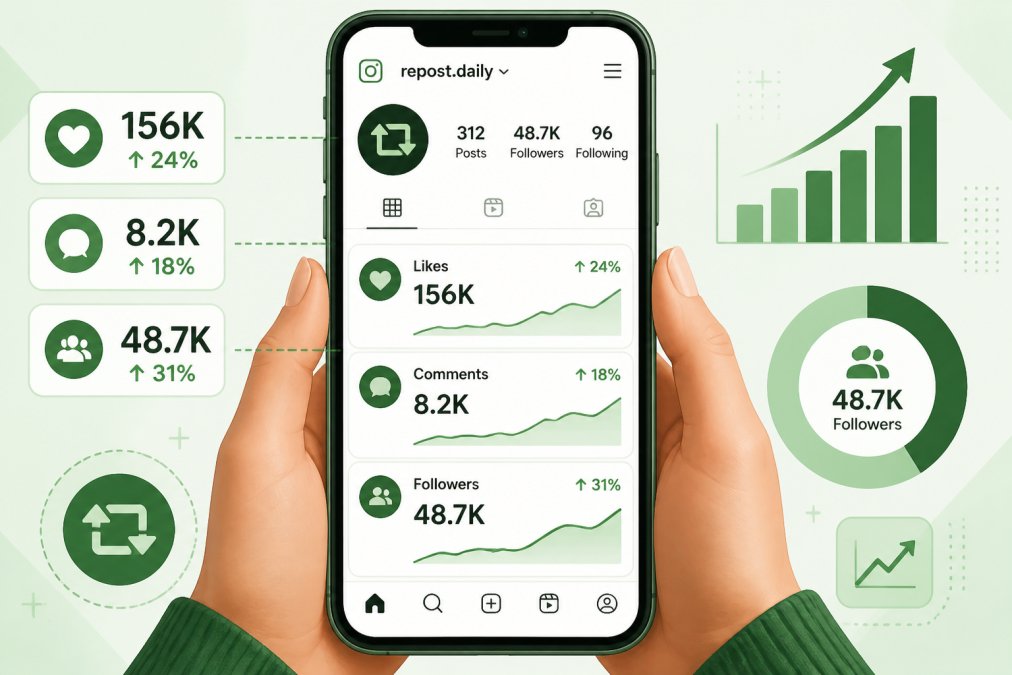
Your bio should clearly state what your account is about. Your profile picture doesn't need to be your face, it can be a logo or icon representing your niche. This is a key advantage of reposting: you maintain complete anonymity while building income.
Feed optimization means organizing your first 9 posts (the grid visitors see) with your best-performing content. Maintain visual consistency through similar filters, color palettes, or layouts to look intentional rather than random.
Feed Optimization and Algorithm Performance Basics
Algorithm performance is driven by four metrics: saves, shares, comments, and time spent. Posts that get saved and shared are treated as more valuable than posts that just get likes. Account growth is cyclical: your first 1,000 followers are hardest to get. After 10,000 followers, your posts reach more people by default. After 100,000, you can monetize through brand partnerships and affiliate links.
Workflow Automation and Content Curation
A sustainable workflow means batch-processing: spend 1-2 hours on Sunday finding 14 days of content, then spend 5 minutes daily posting and engaging. Content curation workflow: identify 5-10 source accounts in your niche, follow them, save high-performing posts, and build a library. Over time, you'll notice patterns about what resonates with your audience.
Instagram Reposting Automation Tools: What to Evaluate
When evaluating tools, focus on three things: scheduling capability, analytics depth, and account safety. A tool that can schedule posts is useless if it shadowbans your account. Analytics depth means seeing which posts get saved, shared, and drive traffic or conversions. Account safety means the tool complies with Instagram's terms of service. Tools posting to your Feed run higher risk than tools handling only Stories and Reels.
Conversion Tracking for Repost Accounts
Conversion tracking measures whether your Instagram audience generates revenue. Set up conversion tracking by adding UTM parameters to links: ?utm_source=instagram&utm_medium=repost&utm_campaign=fitness. Use Google Analytics to track which posts drive traffic and affiliate dashboards to see which posts drive conversions. Without conversion tracking, you're flying blind.
Subscription Models and Account Growth Features
Choose tools with predictable pricing that doesn't increase as you grow. The best tools for reposting accounts are mid-market platforms like Later or Buffer, designed for agencies and content teams managing multiple accounts. They're more expensive than some alternatives but more flexible and less likely to trigger Instagram's automation detection.
Risk Assessment: What Can Go Wrong When You Buy Reposting Services
The biggest risk when buying a reposting service (rather than education) is outsourcing account safety to someone else. If they make mistakes, your account suffers. Shadowban occurs when Instagram limits your post visibility without notification. Your posts appear on your profile but not in hashtag feeds or Explore. The safest approach is buying education rather than services. When you do the work yourself, you control quality and compliance.
Shadowban Risk and Algorithm Penalties
Shadowban happens when you violate Instagram's terms without triggering formal warnings. Common causes: using automation tools too frequently, buying engagement, using banned hashtags, or copying captions word-for-word. Avoid shadowban by using native features when possible, using reputable automation tools sparingly, never buying engagement, using original captions, and maintaining reasonable posting frequency (1-3 posts daily).
Algorithm penalties mean Instagram's algorithm is less likely to show your posts. Avoid penalties by focusing on genuine engagement: spend 5 minutes daily engaging with other accounts, commenting on posts, following accounts, and responding to comments.
Copyright Compliance and Digital Rights Management
When you repost, you're using someone else's intellectual property. Instagram's native repost feature includes attribution by default. Using the Share button credits the original creator and links to their account, considered fair use because you're giving credit and driving traffic. Always use native features when possible, provide clear attribution, never crop out watermarks, and respect creators who forbid reposting.
Instagram Copyright and Fair Use Guidelines for Reposting
Fair use allows limited use of copyrighted material without permission for commentary, criticism, news reporting, teaching, scholarship, or parody. Reposting with clear attribution and new context can be fair use. If you repost a fitness video and add commentary about why it's effective, that's different from reposting with the same caption verbatim. The safest approach: assume you need permission. Use Instagram's native repost feature with automatic attribution and provide additional credit in captions.
According to Instagram's Community Guidelines, reposting is allowed as long as you respect intellectual property rights and provide proper attribution.
Best Practices for Attribution and Repost Etiquette
Attribution means clearly crediting the original creator. Instagram's native Share feature does this automatically. Add value through your caption by explaining why this content matters rather than repeating original words. Use the 70/30 rule: 70% of content from diverse sources, 30% from top-performing creators. This prevents your account looking like a clone.
Media Licensing and Ethical Curation Frameworks
Media licensing means understanding who owns content and what rights they've granted. Before reposting, check the original creator's profile for licensing statements or explicit reposting permissions. If unclear, use the native repost feature, which includes automatic licensing compliance. Ethical curation means selecting content aligning with your values and audience interests.
Instagram Repost Account Growth Strategy: Engagement and Traffic
Account growth happens through algorithmic reach and community engagement. Most reposting accounts focus only on algorithmic reach, neglecting community engagement, a mistake. An account with 10,000 engaged followers earns more than one with 100,000 disengaged followers. Spend 5 minutes daily engaging: like posts, leave genuine comments, follow aligned accounts, and respond to every comment on your posts.
Building Social Proof and Community Through User-Generated Content
Social proof shows others trust your account. User-generated content (content created by followers) is powerful because it comes from real people. Encourage it with calls-to-action: "Share your version of this workout" or "Tag someone who needs to see this." Repost the best user-generated content to Stories, giving credit. Community building happens when followers feel part of something larger and become self-sustaining.
Cross-Promotion and Influencer Partnerships for Viral Reach
Cross-promotion means partnering with other accounts to share each other's content. Most sustainable growth comes from organic cross-promotion with similar-sized accounts. Build relationships by engaging with their content. Viral reach happens when posts get widely shared, which is more likely with strong engagement.

What to Expect: Real Results From a Proven Instagram Reposting System
Following a proven system like The Repost Routine Masterclass produces predictable results. These numbers assume consistent 15-minute daily routine execution, authentic engagement, and strategic content curation. Popular niches (fitness, motivation, business) grow faster; saturated spaces (fashion, beauty) grow slower.
Timeline to $500-$1,000 Per Week Earnings
Monetization typically starts around 5,000 followers. At 5,000 followers with 200 likes per post and 2% click-through rate on affiliate links, you might earn $50-100 weekly. At 10,000 followers, earnings typically jump to $200-300 weekly. At 20,000 followers, $500-800 weekly. At 50,000 followers, $1,000-2,000 weekly. The timeline to $500-$1,000 weekly typically takes 4-8 months from zero followers following a proven system.
Performance Metrics That Matter
Engagement rate (comments + saves + shares / followers) matters more than vanity metrics like follower count. Track these metrics: engagement rate, click-through rate on affiliate links, email signup rate, and conversion rate. Also track which content types perform best. The most important metric is revenue per follower. A 10,000 follower account earning $500 weekly has $0.005 revenue per follower weekly, far more efficient than a 50,000 follower account earning the same amount.
| Metric | What It Means | Why It Matters |
|---|---|---|
| Engagement Rate | (Comments + Saves + Shares) / Followers | Shows audience interest; higher is better |
| Click-Through Rate | Clicks on links / total followers | Shows conversion potential |
| Revenue Per Follower | Total earnings / followers | Shows account efficiency |
| Save Rate | Saves per post / followers | Shows content value; higher means shareable |
| Comment Rate | Comments per post / followers | Shows community engagement |
When evaluating whether to buy a proven Instagram reposting system today, the real question isn't whether it works, data shows it does. The question is whether you'll commit to the 15-minute daily routine for 4-8 months before seeing meaningful earnings. The Repost Routine Masterclass removes guesswork from that equation. You get a tested workflow, proven content sources, clear monetization strategies, and structured accountability. For women with full-time jobs, stay-at-home parents, and anyone camera-shy but motivated to build income, this approach compresses the learning curve from a year of trial-and-error to a month of following a system. Earnings potential is real, but only if you execute. Start with The Repost Routine Masterclass and focus on consistency over perfection, that's where results come from.
Frequently Asked Questions
Can I really earn $500-$1,000 per week with a proven Instagram reposting system if I'm starting from zero followers?
Yes, but growth depends on consistent execution. A proven Instagram reposting system teaches you how to identify high-performing content, optimize your feed, and build audience retention through strategic content curation. Most accounts see measurable engagement rate increases within 2-3 weeks of following the system. Earnings scale with your audience size and conversion tracking accuracy, so starting from zero is not a barrier if you follow the workflow automation steps correctly.
What's the difference between buying a reposting system and using free Instagram reposting automation tools?
Free tools offer basic scheduling and native repost features, but a proven system teaches you the strategy behind what to repost, when, and how to monetize. A paid system includes step-by-step guidance, account growth strategy, conversion tracking setup, and attribution best practices. You also avoid common mistakes that lead to shadowban risk or poor algorithm performance. The system condenses months of trial-and-error into a structured 15-minute daily routine.
Will Instagram flag or ban my account if I use a reposting system?
Not if you follow Instagram copyright and fair use guidelines correctly. The risk comes from poor attribution, mass automation without spacing, or reposting copyrighted content without permission. A proven system teaches you ethical curation frameworks, proper repost etiquette, and digital rights management to keep your account safe. The key is using native integration features or third-party tools that respect Instagram's terms, not buying fake engagement or violating media licensing rules.
What should I look for when choosing a reposting system to buy?
Evaluate whether the system includes conversion tracking setup, content strategy training, and risk assessment guidance. Check if it covers third-party tools vs. native features, feed optimization techniques, and community building through user-generated content. The best systems teach you how to measure performance metrics and adjust your strategy based on engagement rate data. Avoid systems that promise results without teaching attribution, copyright compliance, or ethical curation practices.
This article was written using GrandRanker
Frequently Asked Questions
Can I really earn $500–$1,000 per week with a proven Instagram reposting system if I'm starting from zero followers?
Yes, but growth depends on consistent execution. A proven Instagram reposting system teaches you how to identify high-performing content, optimize your feed, and build audience retention through strategic content curation. Most accounts see measurable engagement rate increases within 2–3 weeks of following the system. Earnings scale with your audience size and conversion tracking accuracy, so starting from zero is not a barrier if you follow the workflow automation steps correctly.
What's the difference between buying a reposting system and using free Instagram reposting automation tools?
Free tools offer basic scheduling and native repost features, but a proven system teaches you the strategy behind what to repost, when, and how to monetize. A paid system includes step-by-step guidance, account growth strategy, conversion tracking setup, and attribution best practices. You also avoid common mistakes that lead to shadowban risk or poor algorithm performance. The system condenses months of trial-and-error into a structured 15-minute daily routine.
Will Instagram flag or ban my account if I use a reposting system?
Not if you follow Instagram copyright and fair use guidelines correctly. The risk comes from poor attribution, mass automation without spacing, or reposting copyrighted content without permission. A proven system teaches you ethical curation frameworks, proper repost etiquette, and digital rights management to keep your account safe. The key is using native integration features or third-party tools that respect Instagram's terms, not buying fake engagement or violating media licensing rules.
What should I look for when choosing a reposting system to buy?
Evaluate whether the system includes conversion tracking setup, content strategy training, and risk assessment guidance. Check if it covers third-party tools vs. native features, feed optimization techniques, and community building through user-generated content. The best systems teach you how to measure performance metrics and adjust your strategy based on engagement rate data. Avoid systems that promise results without teaching attribution, copyright compliance, or ethical curation practices.